
The sanctuary and the bird it was built for
Rollapadu · 1988–2024
Rollapadu Wildlife Sanctuary covers about 6 square kilometres of grassland in Nandyal district, Andhra Pradesh. It was notified in 1988 for one reason: it held Great Indian Bustards, and they were already disappearing everywhere else. It remains the only bustard sanctuary in the state. The bird itself has now effectively left it.
-
1988
Sanctuary declared. 6.14 km² of grassland protected specifically for the Great Indian Bustard and the Lesser Florican — one of the few places in India set aside for grassland birds rather than large mammals.
-
2017
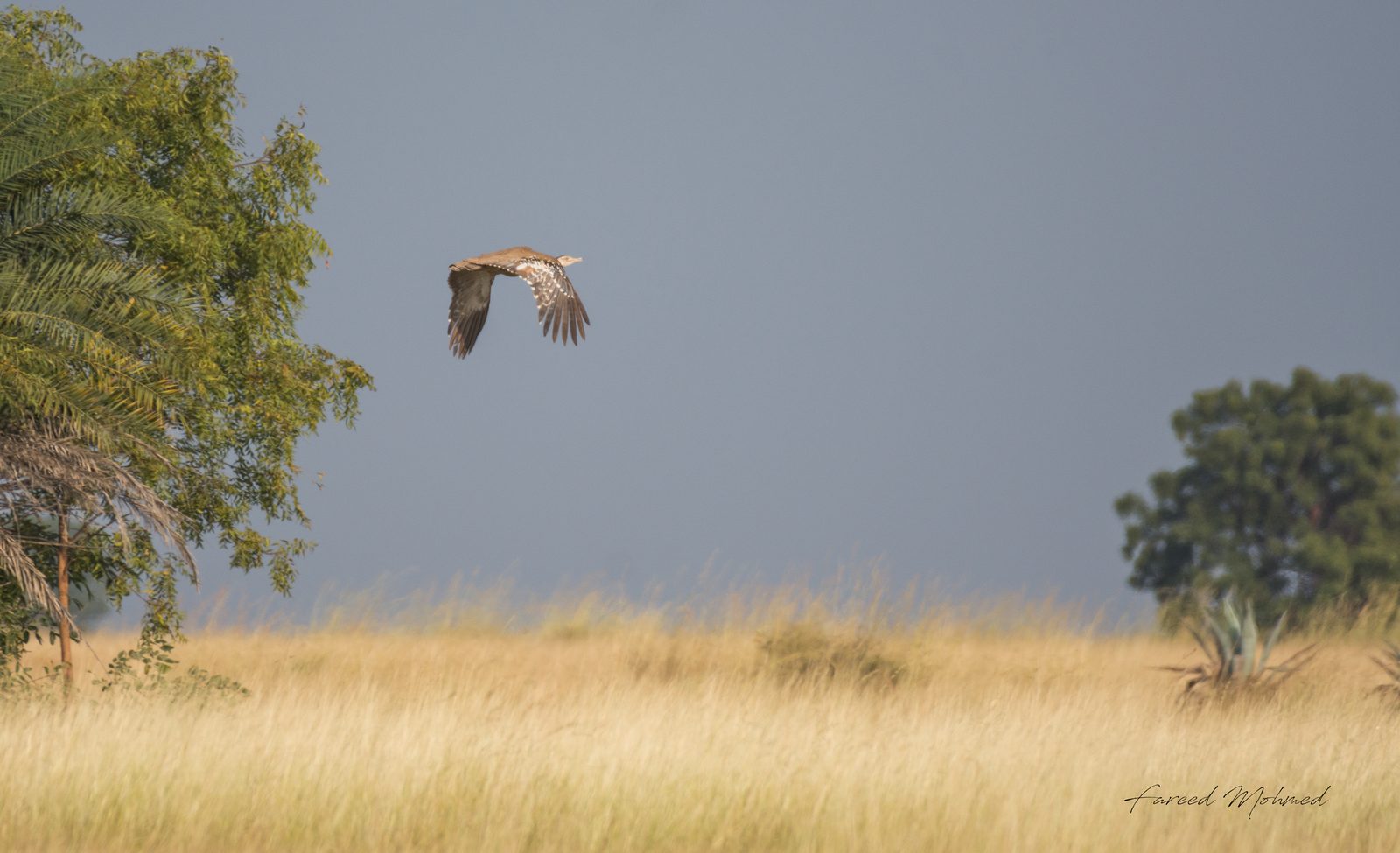
One bird, 10 December, two in the afternoon. These photographs. A single Great Indian Bustard in the grass — the only one I have ever seen.
-
2022
Last confirmed sighting in Andhra Pradesh. Reported from farmland outside the sanctuary, not inside it. Officials believed the bird was a lone female.
-
2024
No sightings for years. The state forest department confirms the species has not been recorded at Rollapadu or its surroundings, and describes it as at risk of local extinction.
all of India
the last stronghold
and Andhra Pradesh combined
where it no longer occurs
Figures from published population assessments and state forest department reporting. The species is listed Critically Endangered by the IUCN.
A bird that cannot see wires
Why the last ones keep dying
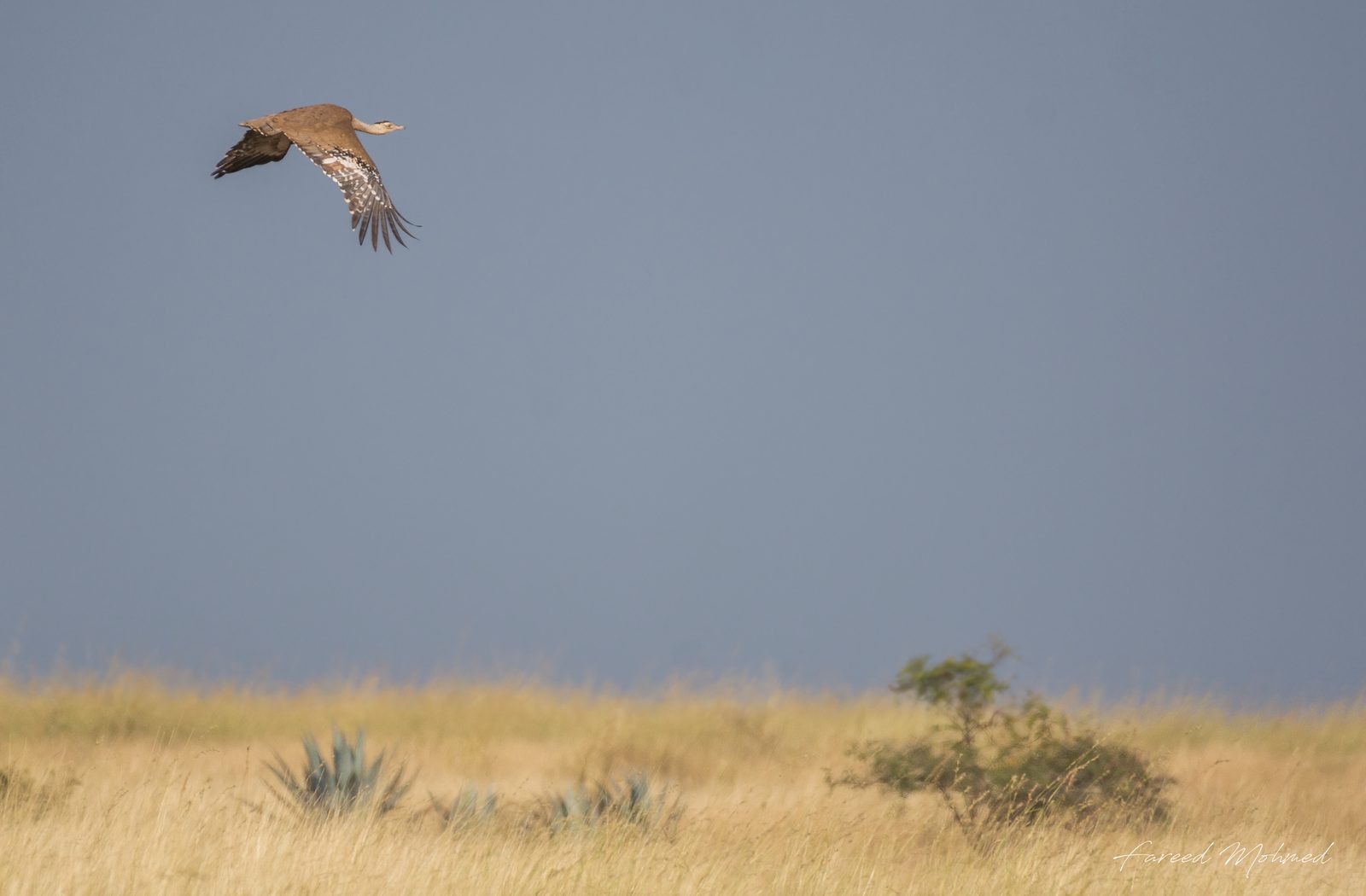
Habitat loss explains where the bustards went. Power lines explain why the survivors keep vanishing.
A Great Indian Bustard weighs up to about 15 kilograms, which makes it one of the heaviest flying birds in the world. It flies low, heavily, and with limited frontal vision — its eyes are set to scan the ground and the sides, not the air directly ahead. It also cannot change direction quickly once committed.
Put a high-tension transmission line across that flight path and the outcome is predictable. Collisions with power lines are now considered among the principal causes of adult mortality in the surviving population, and the losses fall on breeding-age birds a species this small cannot spare.
The rest is the familiar grassland story: open country ploughed, grazed to bare soil or planted over; free-ranging dogs taking eggs and chicks from ground nests; and a bird that lays a single egg in a season and cannot recover quickly from any of it.
The frames
011 frames · Rollapadu WLS · 10 December 2017
Field notes
Two o'clock on a December afternoon — the wrong time of day for photography and the only time the bird was there. Most of these frames are a head and a neck above the grass, because that is what a bustard mostly is when it does not want to be seen: a metre-tall bird that disappears completely into a metre of grass, and only reappears when it lifts its head to look at you.
The distances were long and the light was flat and hot. I have better photographs of commoner birds. I do not have another photograph of this one.
Rollapadu is small — a little over six square kilometres, crossable in a few minutes of flight — and it sits in a landscape that is otherwise farmed. That is the whole problem: a grassland species with a large home range, given a fragment, surrounded by everything that makes grassland stop being grassland.
The checklist for that afternoon is on eBird, one bird, and the photographs are archived in the Macaulay Library. If you want to see the same sanctuary with a bird still in it, the Lesser Florican was there the following September.