
Gardening · Plant Care Sheet
Tomato
Solanum lycopersicum
The most-grown garden vegetable, and one of the most rewarding
Tomatoes reward steady care: plenty of sun, deep and even watering, and early support. Get those three right and most common problems never start.
Also called: Love Apple
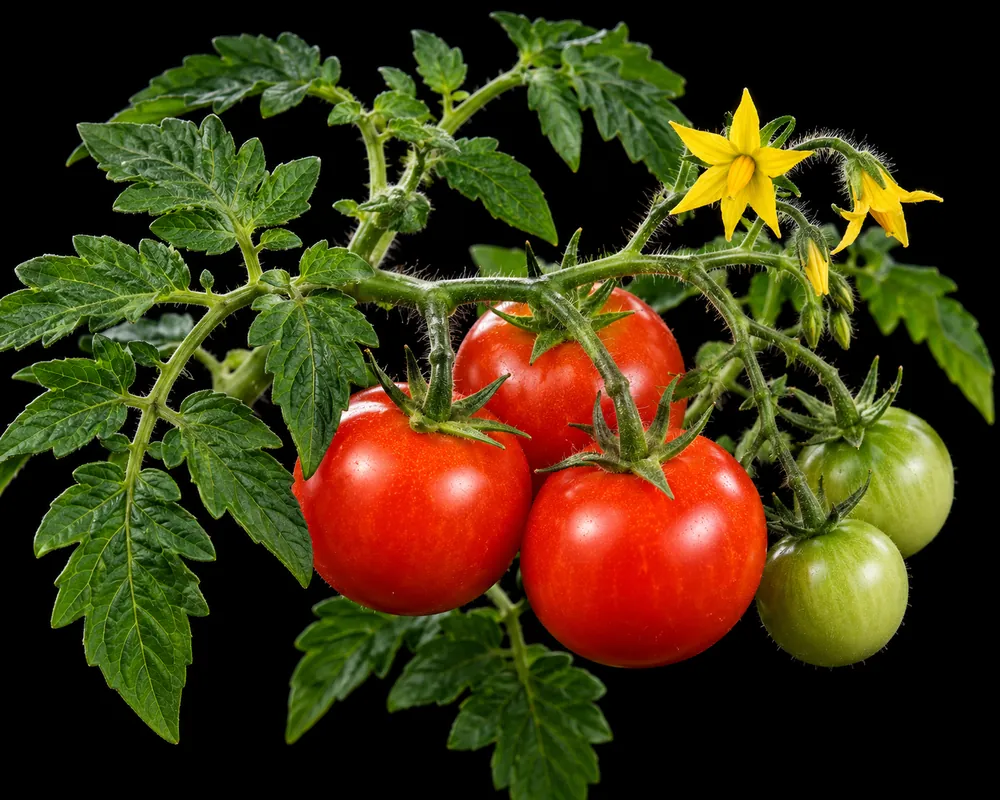 Illustration
Light
Full sun — 6-8 hrs/day
Water
Deep watering, 2-3×/week
Soil
Rich, well-draining, pH 6.0-6.8
Temperature
18-29°C (65-85°F)
Humidity
Moderate — avoid wetting foliage
Growth rate
Fast — 60-85 days to first harvest
Care Guide
Light
Needs at least 6-8 hours of direct sun daily. Fruit set and flavour both drop off sharply in part shade — if your tomatoes are leggy and pale, the first thing to check is sun exposure, not feeding.
Watering
Water deeply 2-3 times a week rather than lightly every day, letting the top inch of soil dry between waterings. Consistency matters more than quantity — alternating drought and heavy watering is the single biggest cause of blossom end rot and fruit cracking.
Soil
Rich, loose, well-draining soil with a slightly acidic pH of 6.0-6.8. Work in compost or well-rotted manure before planting; tomatoes are heavy feeders and perform poorly in thin or compacted soil.
Temperature & Humidity
Thrives between 18-29°C. Fruit set stalls below 10°C or above 35°C — in very hot climates, afternoon shade during peak summer helps keep flowers setting. Avoid overhead watering in humid weather, which encourages fungal disease.
Feeding
Start with a balanced fertilizer at planting, then switch to a lower-nitrogen, higher-potassium feed once flowering begins — too much nitrogen late in the season produces lush leaves at the expense of fruit.
Pruning & Support
Stake or cage plants early, before they sprawl. For indeterminate varieties, pinch out the "suckers" that form between the main stem and side branches to keep growth focused on fruiting stems and improve airflow.
Propagation
Grown from seed, started indoors 6-8 weeks before the last frost, or from nursery seedlings. Side shoots pinched during pruning can also be rooted in water to start new plants.
Harvesting
Pick when fruit has fully coloured but still feels slightly firm — it ripens a little further off the vine. Regular picking encourages the plant to keep setting new fruit.
Common Problems
Select the matching symptoms in the diagnostic tool for organic and chemical remedies.
Open Diagnostic Tool →Growth & Lifecycle
Mature Size
1-2 m tall (indeterminate) or 0.6-1.2 m (determinate/bush)
Growth Rate
Fast
Bloom Time
6-8 weeks after planting, continuing through the season
Lifespan
Annual (grown as a perennial in frost-free climates)
Where It Grows
A warm-season crop — needs nighttime temperatures reliably above 10°C to set fruit. Check how it fits your specific location:
Check Your Region →The ripe fruit is safe to eat, but the leaves and stems contain solanine and are mildly toxic to pets and humans if eaten in quantity.