
Where the roots live
The one thing to get right first
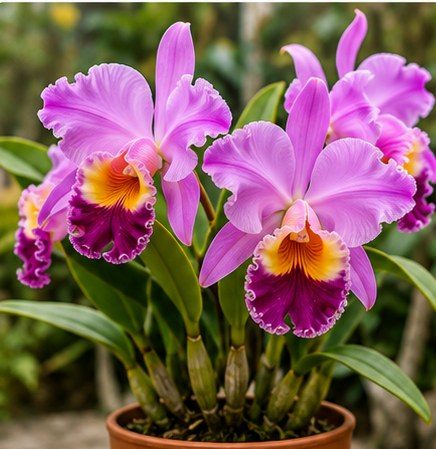
An orchid's roots tell you almost everything about how to keep it. Most are epiphytes — in the wild they grip bark and drink from rain and humid air, so they need to be wet, then dry, and never sitting in it. Only the ground orchids belong in something resembling soil. Find your orchid below, and its watering rhythm follows from where its roots sit.
01
Bare roots,
in the air
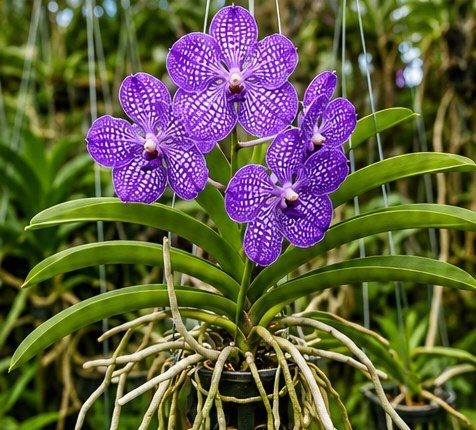
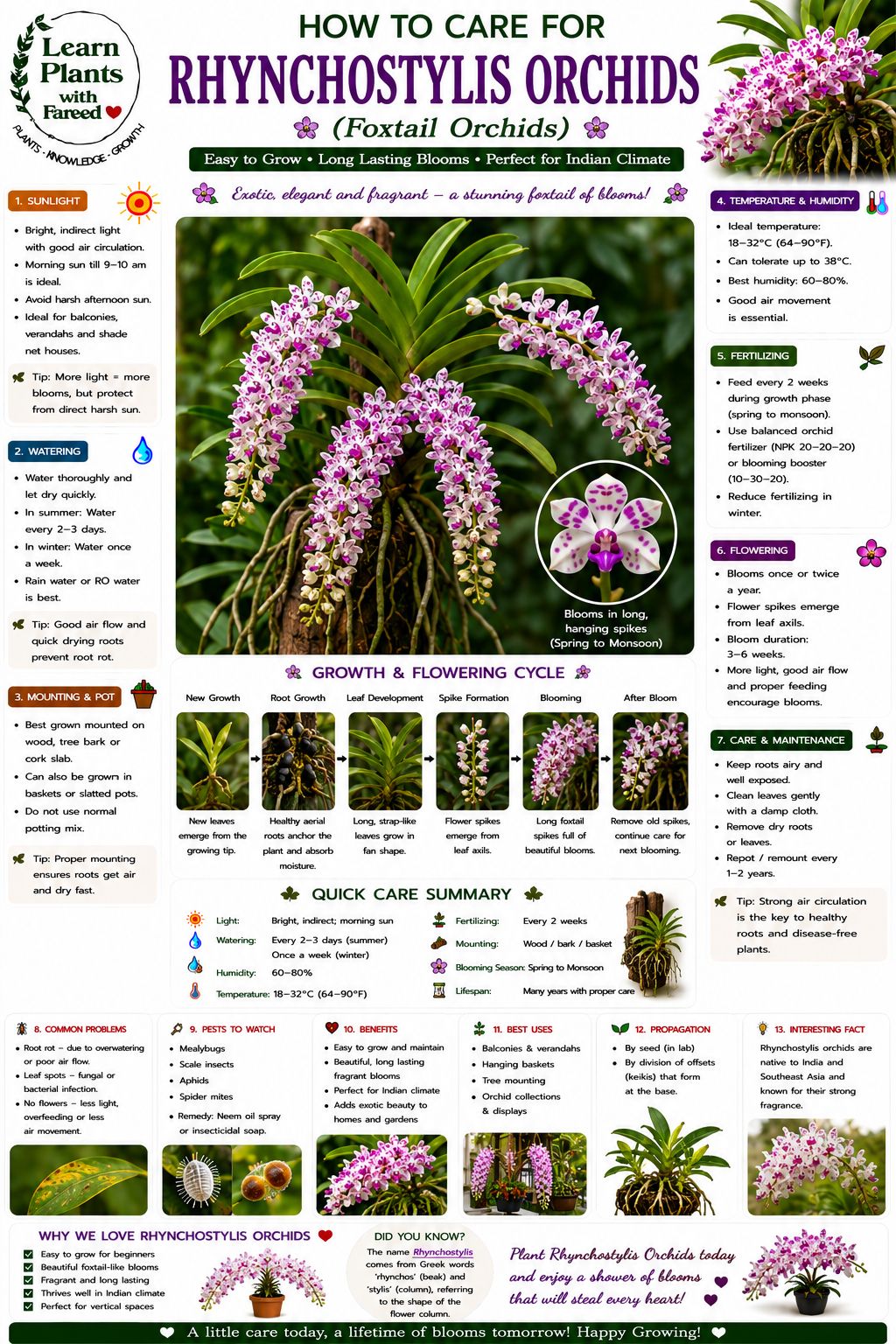
No medium at all. Hung in slatted baskets or mounted on wood, bark or cork, with the roots exposed and free to hang. They dry within the hour and need watering that often in heat.
02
Bark and chips,
in a pot
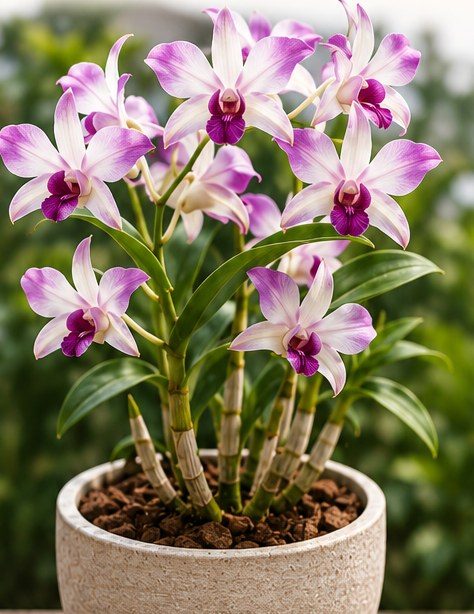
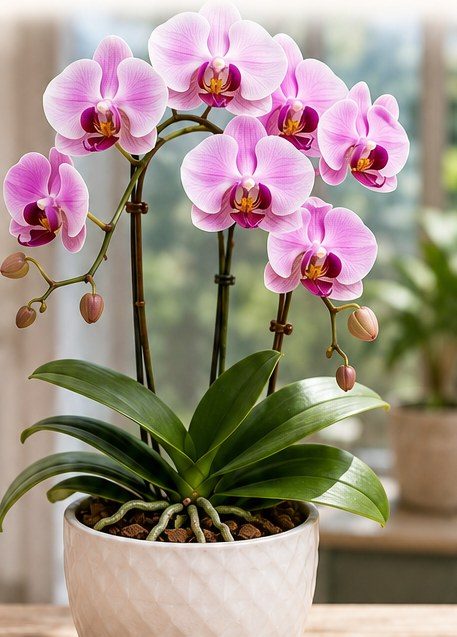
Chunky, open mixes of pine bark, charcoal and coco chips in a pot with real drainage. Water thoroughly, then let the mix dry before the next round — the gaps between the chips are as important as the chips.
03
Humus soil,
at ground level
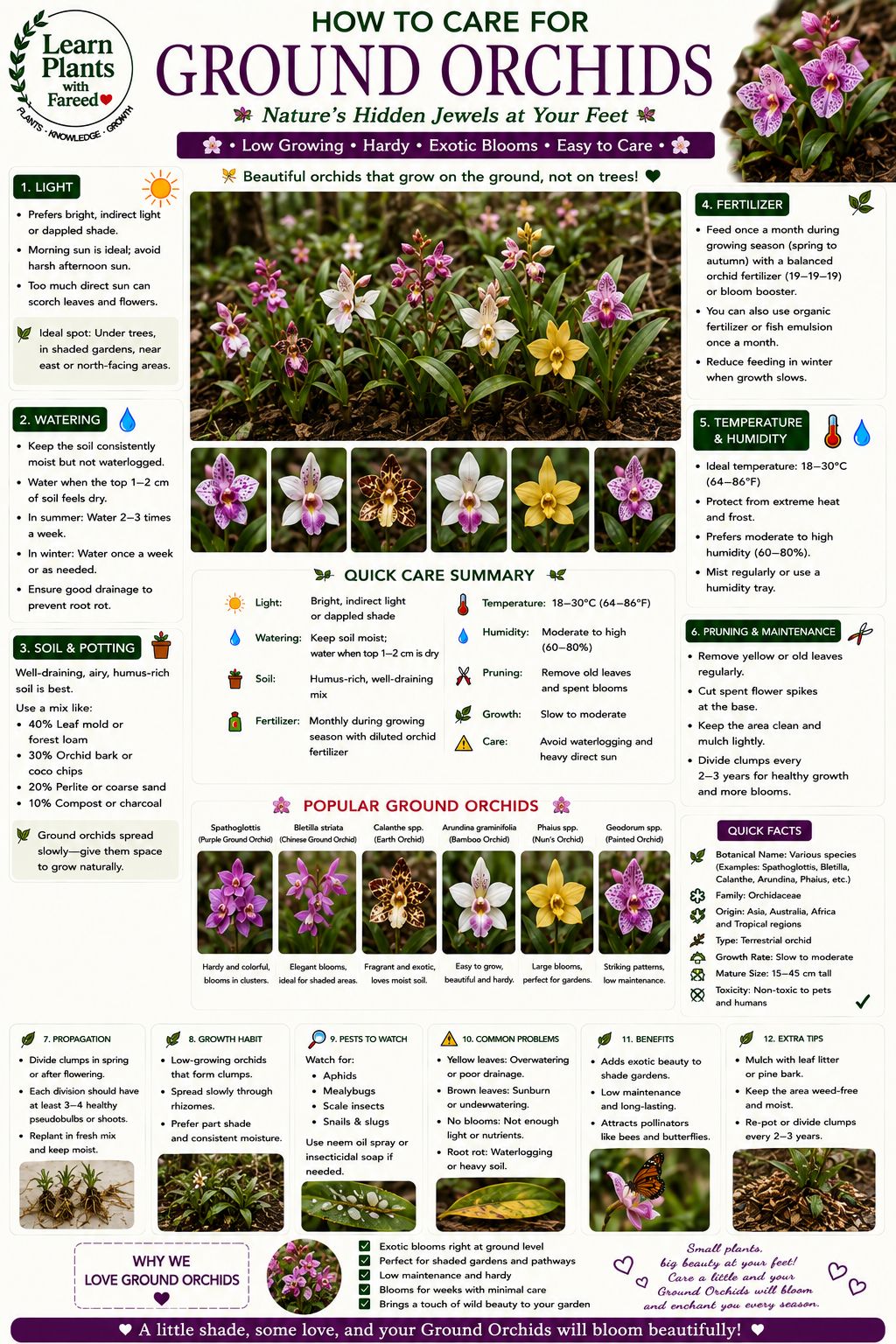
The terrestrials. Leaf mould and forest loam, opened up with bark and coarse sand, kept consistently moist in dappled shade under trees. The only orchids here that go in the ground.
The orchids
007 care sheets · light · water · medium · feed
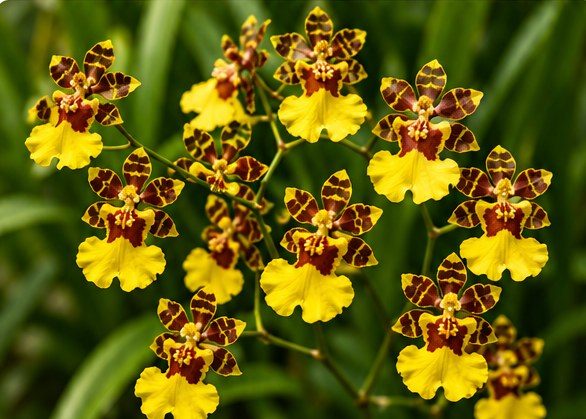
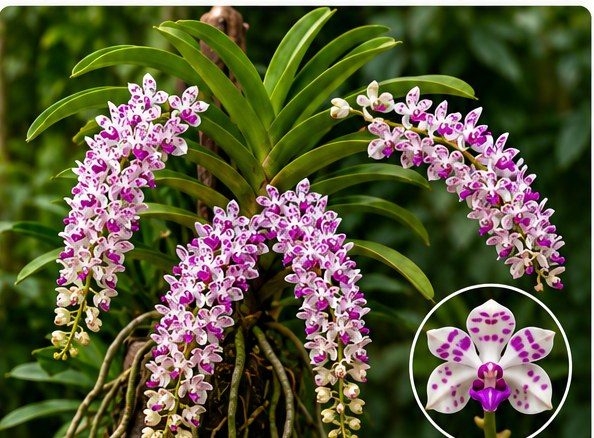
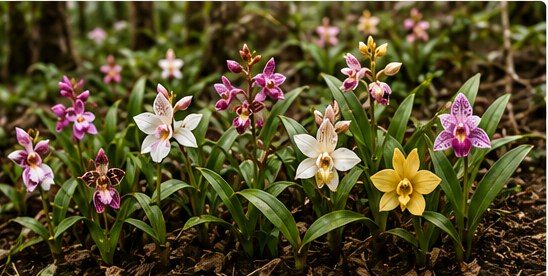
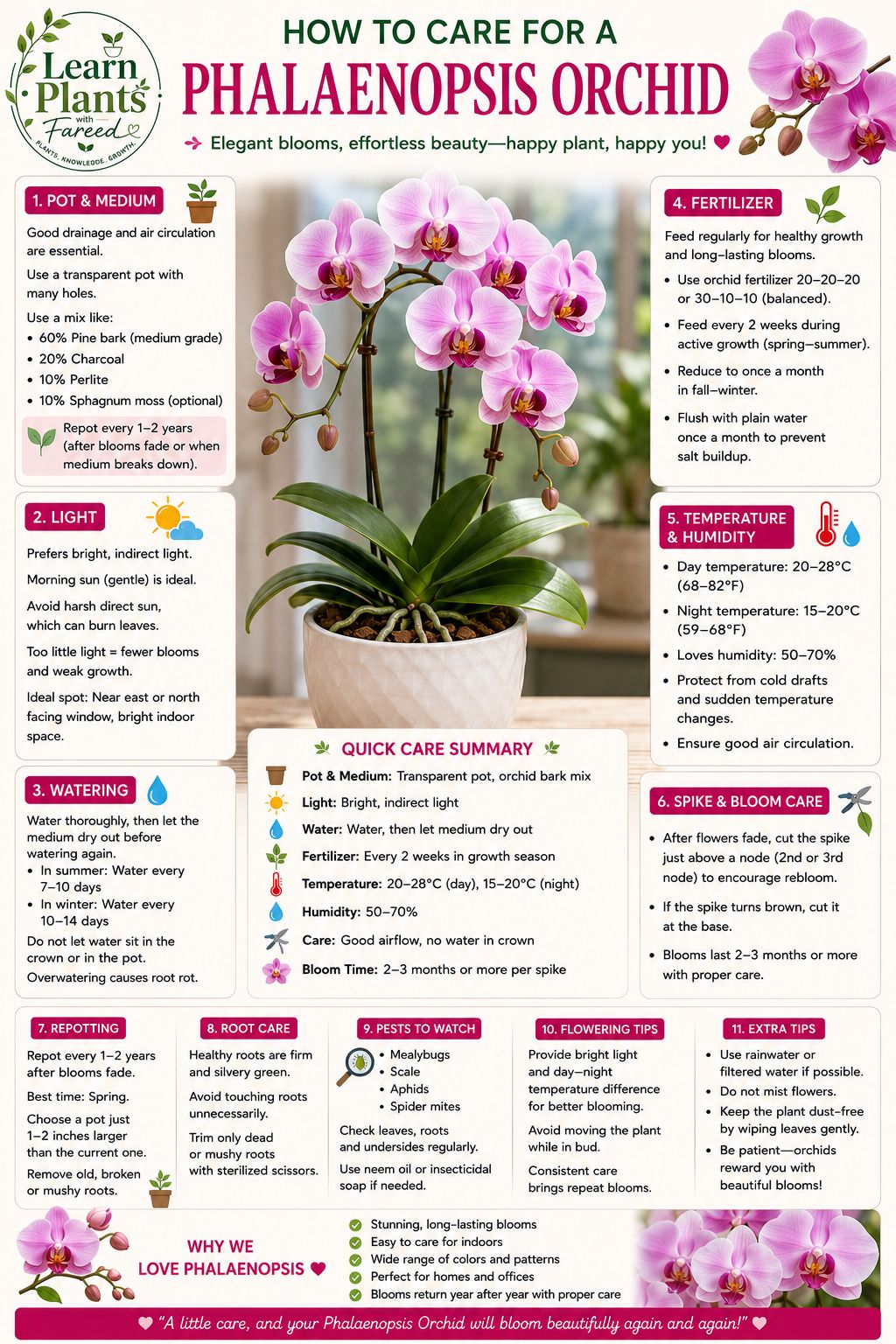
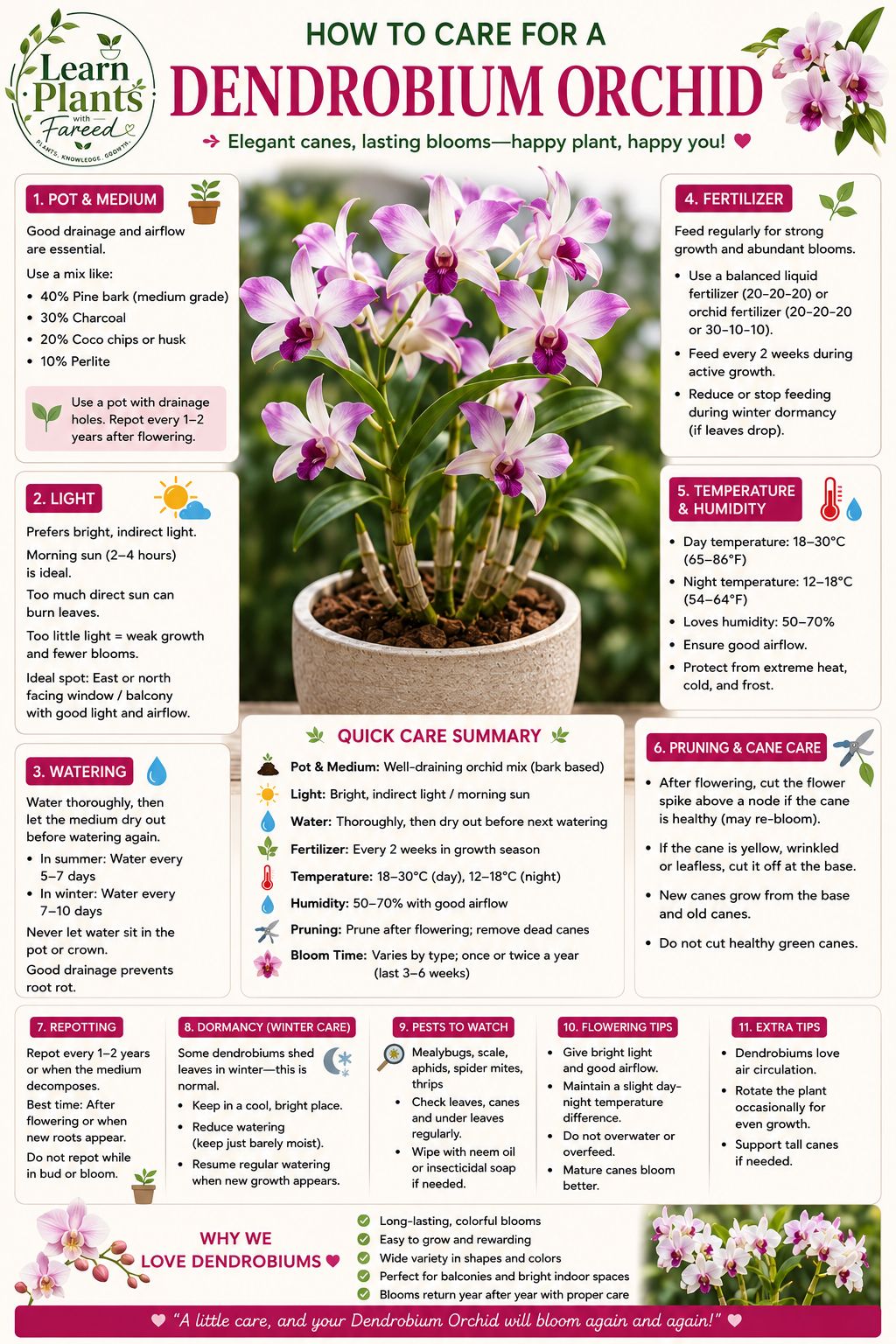
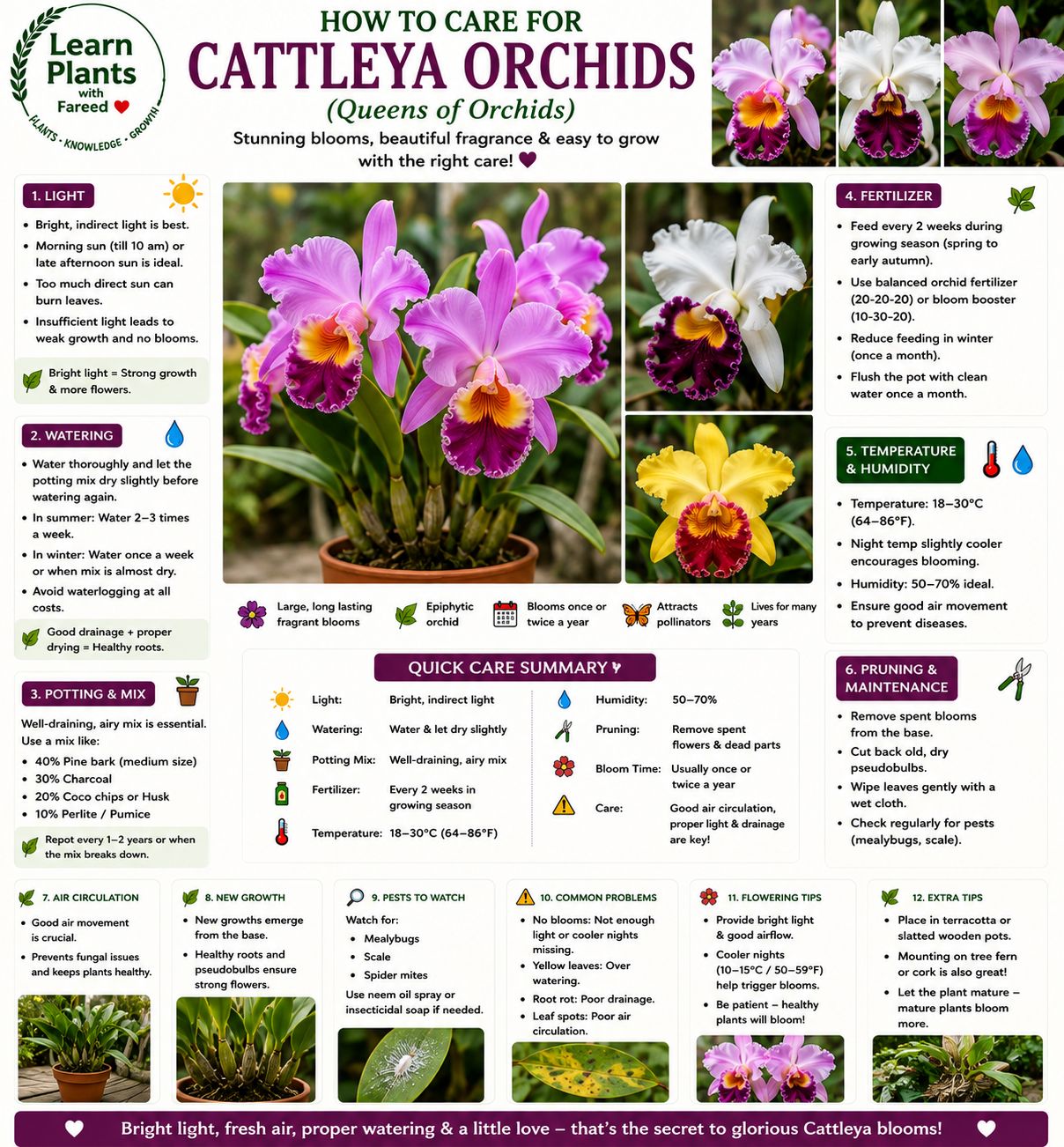
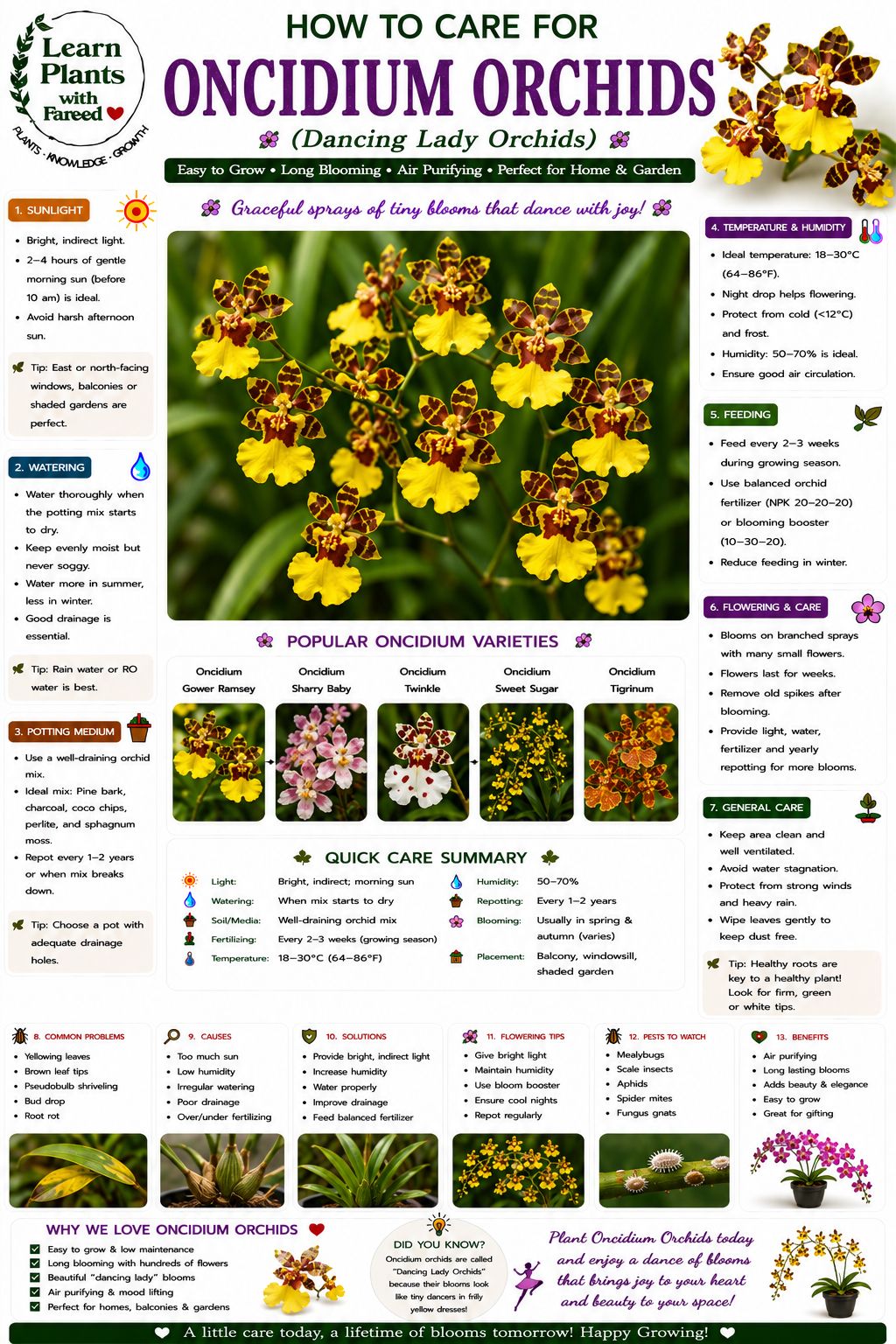
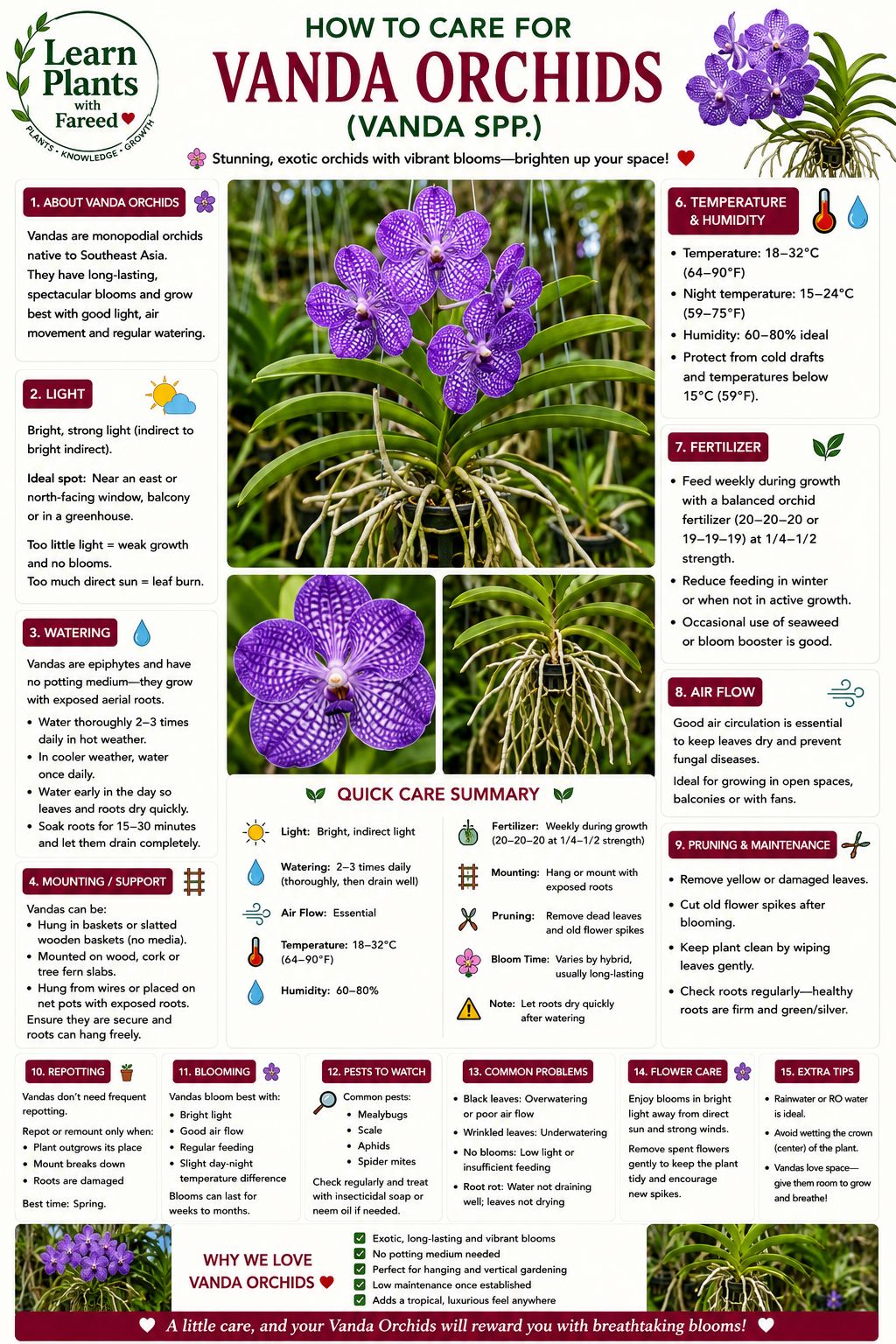
Growing notes
Watering is the thing everyone overdoes. An orchid wants a thorough soak and then a genuine dry-out, not a small drink every few days — and no water left standing in the crown or the pot, which is where crown rot and root rot both start. If you are unsure, wait a day.
Air movement matters nearly as much. Every sheet here asks for good circulation, because it dries the leaves and roots quickly and keeps fungal problems from getting a foothold. A balcony, a verandah or a shade net house does this for free; a closed room does not.
And blooms follow light and a cool night. Weak growth with no flowers is almost always insufficient light rather than insufficient feeding — and for Cattleya, Oncidium and Dendrobium, a few degrees of drop between day and night is often what finally triggers a spike. Feed at quarter to half strength, flush the pot with plain water once a month to clear salts, and let the plant mature. Mature plants bloom better.