
The tide line
Tap a name to open its frame
A coastline is not one habitat but four, stacked from open water to dry sand, and every bird here works a particular band of it. Learn the bands and you stop scanning at random — you know where to point the lens before the bird shows up.
Open water
& air
Plunge divers and surface snatchers. They hunt on the wing, hover, then drop — so the frame is always a question of anticipating the turn.
Shallows
& lagoon
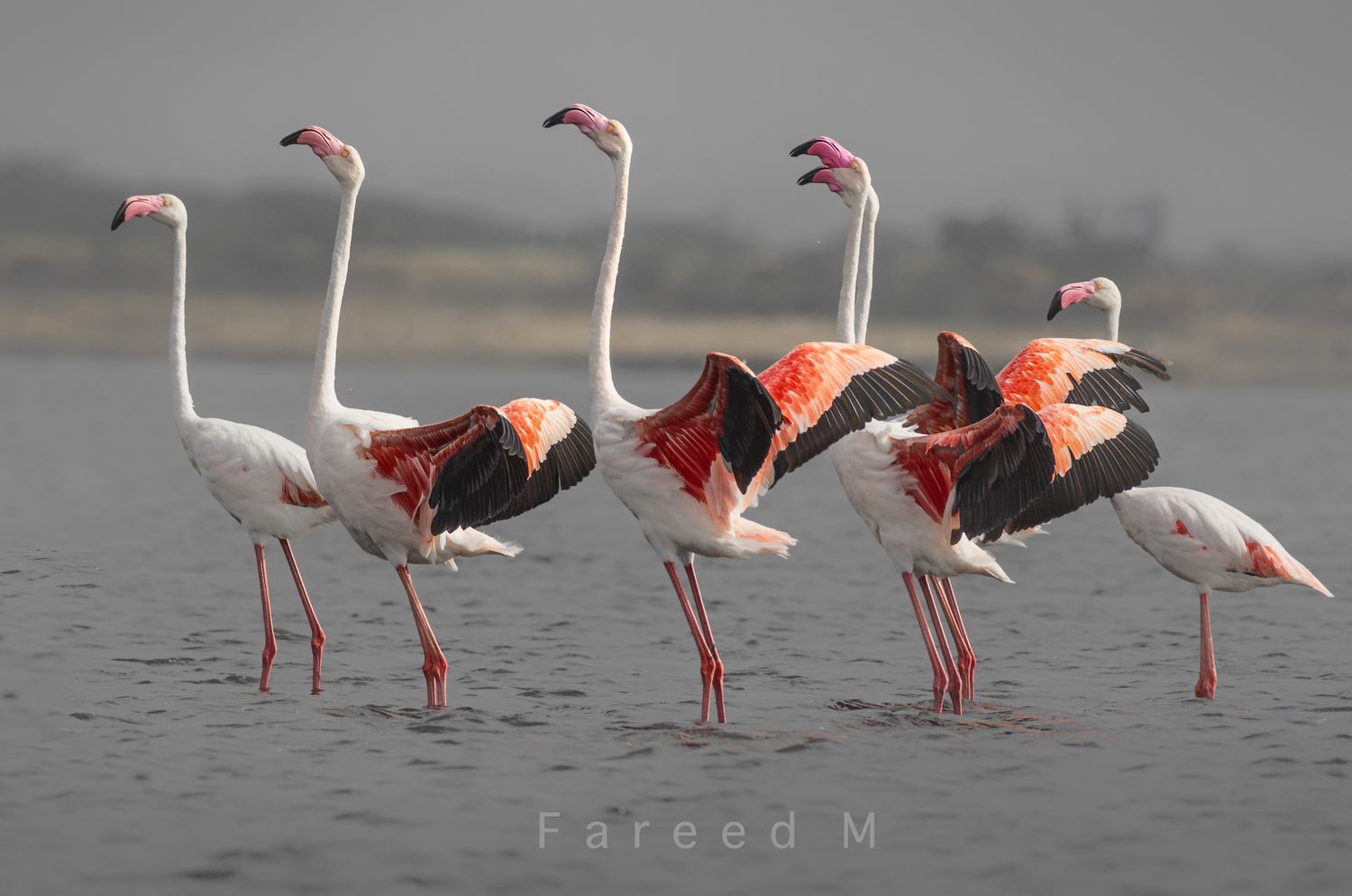
Standing hunters and filter feeders, working water from ankle to knee depth. Patient birds, and the ones that reward patience back.
Mudflat
& surf line
Probers and pickers on wet sand, following the water in and out. Low, fast and easily spooked — this is the zone that demands you lie down.
Above
it all
The coastal raptor. It watches the whole system from a dead palm or a slow circle offshore, and everything below reacts when it moves.
The frames
018 frames · lagoon, mudflat & open coast
Field notes
Coastal work is mostly about light and height. The light is only good for about ninety minutes after sunrise, before the water goes flat and white and every white bird blows out. The height matters more than the lens — the difference between a snapshot and a photograph here is usually whether you were standing up or lying flat on the sand at eye level with the bird.
Four of these frames are not mine. The Little Egret with the catfish, the Eurasian Oystercatcher, the Common Tern and the Whimbrel-and-Curlew pair were photographed by Saranya Subramanian, and appear here with her permission. Each is credited on its own frame.
Dates and locations here are matched from my eBird checklists rather than from the files themselves, since most of these were exported without their metadata. Pulicat has been many trips over several years and a few frames may sit on the wrong one — I am working back through them.
The other half is distance. Waders have a break distance they will not let you inside, and crossing it costs you the bird and everything else on that stretch of flat. Better to pick a line the tide is pushing them along, get low, stop moving, and let them walk into the frame.